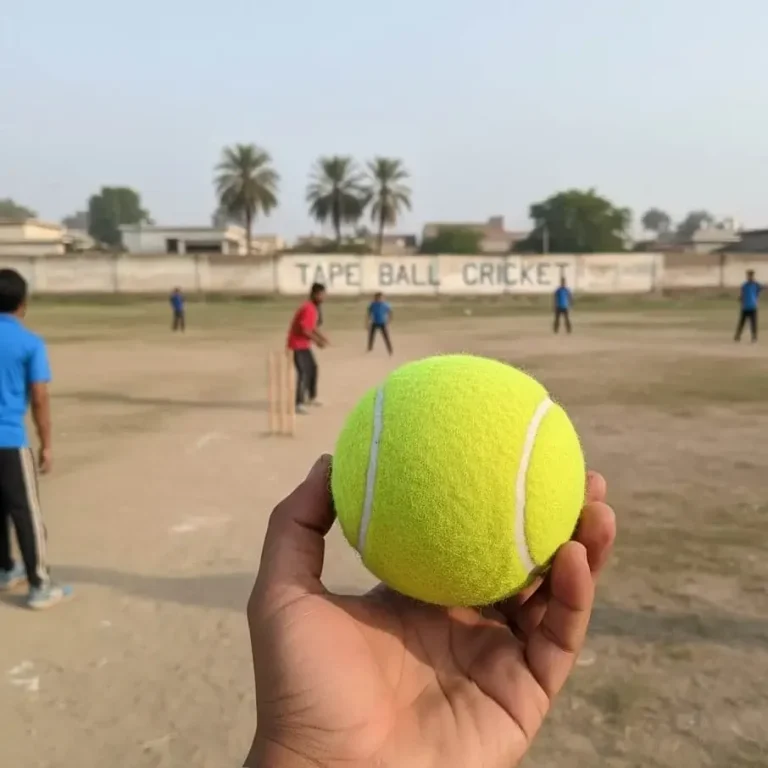
HOW TO SWING TAPE BALL IN CRICKET 2025
How to Swing Tape Ball in Cricket: A Simple Guide
Swinging a tape ball can be one of the most satisfying skills in cricket. Even though it’s not as complex as swinging a traditional leather ball, getting the tape ball to move can surprise the batter and keep them on their toes. You’re in the right place if you’ve ever wondered how to make the tape ball swing in your favour.

In this article, I’ll share some straightforward tips on how to get your tape ball swinging, including the best grips, conditions, and techniques to use. You can add that extra edge to your bowling game by the end.
Getting the Basics Right: Grip and Seam Position
The first thing you need to know is that the grip is crucial when swinging a tape ball. It’s pretty simple, but it takes a little practice.
- Outswing: If you want the ball to swing away from the batter (the outswing), grip the ball like you would a standard cricket ball with your index and middle fingers placed together along the seam. The seam should point towards the slips (or gully). Your thumb goes to the bottom to help with control. When you bowl, the ball will swing away from the batter.
- Inswing: For the inswing (where the ball moves towards the batter), use the same grip, but this time point the seam towards the leg slip. Once you release it, the ball will move towards the batter.
Don’t worry too much about perfecting it the first time; focus on ensuring the seam is in the right direction.
How the Shiny Side and Rough Side Matter
One of the cool things about tape balls is that they’re not like regular cricket balls. One side of the tape ball will usually be shiny, and the other will be rough. And guess what? This plays a massive part in how much the ball will swing.
Here’s the trick:
- Shiny side out: For outswing, keep the glossy side of the tape ball facing the slip fielders. The smooth side helps the ball move faster through the air, while the rough side creates friction, causing the ball to swing toward the shiny side.
- Rough side out: For inswing, keep the rough side facing the batter and the shiny side on the leg side. This creates more resistance on one side, causing the ball to swing inwards.
Let the Wind and Weather Do Their Job
Don’t underestimate the weather! If you’re bowling on a humid or overcast day, the ball will likely swing much more because the air is moist. This is because humidity helps the ball move through the air better.
On the flip side, your tape ball might not swing as much if it’s dry and windy. But don’t let that get you down—adjust your speed and grip accordingly.
Speed and Follow-Through: Speed Matters
When trying to swing a tape ball, you want to bowl fast enough to get some movement but not so fast that you lose control. The key is finding a balance between speed and power.
As you build speed, focus on a clean follow-through. Your body movement after releasing the ball helps keep the ball moving in the right direction. A smooth, controlled action will make a huge difference in generating that swing.
Length and Bounce
A tape ball’s bounce is slightly different from that of a regular cricket ball. Tape balls typically don’t bounce as high, so you’ll want to adjust your length accordingly.
- Fuller deliveries: When you bowl full length, you’ll give the ball more time to swing, and you might see the ball move a little more.
- Shorter deliveries can surprise the batter with an awkward bounce, especially if the ball is slightly rough on one side.
Mixing up your lengths will keep the batsman guessing and make your swing even more effective.
Keep Practicing and Experimenting
Like any skill in cricket, swinging a tape ball takes practice. The more you experiment with different grips, speeds, and seam positions, the better you’ll get at reading the conditions and getting that ball to move. The more relaxed you are and the more comfortable you get with the tape ball, the easier it’ll become.
Common Mistakes to Avoid
Here are a couple of things to watch out for while trying to swing the tape ball:
- Wrong seam position: You won’t get the desired swing if your seam isn’t angled correctly. Make sure it’s pointing in the direction you want the ball to go.
- Inconsistent speed: If you’re inconsistent with your speed and follow-through, it’s harder to control the ball. Stick to a speed that’s comfortable for you but fast enough to generate swing.
FAQs
- What’s the key to swinging a tape ball? The grip and seam position are crucial. Point the seam towards the slips for outswing and leg slip for inswing, ensuring your fingers are along the seam.
- How does the shiny and rough side of the tape ball affect swing? The shiny side should face the direction you want the ball to swing towards. For outswing, the shiny side faces slips; for inswing, it faces the leg side.
- Does weather play a role in tape ball swing? Yes, humid or overcast conditions generally help the ball swing more effectively as the moist air allows for better movement.
- What kind of speed and length should I aim for when trying to swing? Aim for a balance of speed to generate movement without losing control. Fuller deliveries often allow more time for swing to develop.
- What are some common mistakes to avoid when trying to swing a tape ball? Ensure the seam is consistently in the right direction and maintain a relatively consistent speed and follow-through for better control.
- Is swinging a tape ball difficult to learn? It’s not overly complex, but it requires practice to get the grip, seam position, and speed right to achieve consistent swing.
Conclusion
Swinging a tape ball might not be as complex as bowling with a leather ball, but it’s still a skill that can make you a better bowler. By focusing on the proper grip, seam position, and the conditions you’re bowling in, you can get the ball to move effectively. And remember, practice makes perfect!
So, the next time you step up to bowl, try focusing on these basics. With a bit of work, you’ll be confidently swinging the tape ball and surprising your opponents with your movement.