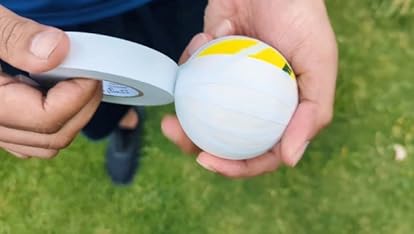
HOW TO INSWING TAPE BALL IN CRICKET 2025

GUIDE TO HOW TO INSWING TAPE BALL IN CRICKET
In tape ball cricket, bowlers are required to have a bit of creativity combined with cricketing skills to create any movement with the tape ball since it is relatively softer and lighter when compared to the classic leather ball. One of the most deadly deliveries in a bowler’s repertoire is the inswinger—which is a ball that moves to the batter’s body, usually surprising the batter.Becoming a master at the art of inswinging a tape ball is a skill that can turn the tide of a match by breaking key partnerships and snatching key wickets for the team.
In comparison to a leather cricket ball, a tape ball is much more difficult to inswing due to its lightweight and soft shell properties. But with the right techniques, this mishap can be easily avoided leading to a great swing and inward movement of the tape ball allowing for a greater bat contact area.
This article will take into account the specifics of how to tape ball inswing in cricket, such as wrist and seam positions, run ups, and even weather conditions that assist in its movement.
How to Bowl using an Inswinging Tape Ball in Cricket
While inswinging the tape ball may appear to be difficult, adopting the suitable techniques and gaining an understanding of the ball’s behaviour and its grip will make it an effective addition to your bowling strategy. Here are some important strategies that will aid in the effective inswinging of the tape ball.
Insights on how a Tape Ball works.
A tape ball in comparison to a leather ball is significantly lighter which allows the inswinger to generate a larger force. A taped ball does not have the same weight as a leather ball which allows there to be a lower level swing. A tape ball can be inswingered with the orientation of the wrist, seam and angle of delivery. When you know how to manage these elements, you can make the ball move in the air.
Tip: A worn-out side of the ball can help generate more swing. Ensure that one side of the ball is rough while the other remains smooth to maximize movement.
The Role of the Seam in Inswing
To get the tape ball to inswing, the position of the seam is critical. You want the seam to be angled towards the leg side, aiming roughly towards leg slip or short fine leg. This positioning creates air resistance on the outside of the ball, which makes it swing inwards. A well-angled seam combined with the right wrist action can lead to deceptive movement, making it difficult for the batter to judge the delivery.
Tip: While delivering an inswinger, ensure to keep the seam pointing towards the leg slip or leg gully. Do not lose control of the delivery and ensure the seam stays upright.
Wrist Position for Inswing
The wrist position plays a important role in determining whether the tape ball swings in the right direction. For an inswinger, the wrist needs to rotate inward at the point of release. This inward rotation pushes the ball’s seam towards the leg side, creating the necessary movement.
Tip: To achieve an inswing, ensure that your wrist is firm but relaxed and that your thumb is pressed firmly against the back of the ball. Rotate the wrist inward at the point of delivery to encourage the ball to swing towards the batsman.
The Importance of the Seam Movement
While the wrist plays a significant role in generating swing, the seam is your main tool for getting the tape ball to move. On delivery, the seam should be held upright, and your finger pressure on the ball should be distributed evenly to control the direction of the movement. When you release the ball, ensure the seam is angled towards the leg side to encourage it to swing inwards.
Tip: After a few deliveries, check if the seam is staying upright during your delivery. If the seam is misaligned or pointing sideways, you will need help to create an inswing.
Bowling Action and Follow-through
A fast and compact bowling action is crucial for controlling the tape ball’s movement. Your arm should be coming over the top, with the wrist turned inward as you release the ball. A smooth follow-through is equally important, as it helps maintain the ball’s trajectory and speed. A rushed follow-through could cause the seam to misalign, making it difficult to get the desired swing.
Tip: Focus on a smooth action and follow through. Your body should rotate naturally, allowing the wrist to snap inward and give the ball the necessary direction.
Focusing on the Ball’s Release Point
The release point of the ball is extremely important when trying to swing it. To inswing the tape ball, release it slightly wider of the stumps, allowing the seam to cut through the air. If you release the ball too close to your body or at an incorrect angle, the ball may lose its chance to swing effectively.
Tip: Release the ball from a higher arm action, giving it room to cut through the air and swing in towards the batsman. The key is a smooth release point.
The Effect of Pitch Conditions on Inswing
The condition of the pitch can significantly decide how much the tape ball swings. On a pitch with some moisture or grass, the ball is more likely to swing. In dry conditions, however, the ball may not swing as much, and you might need to rely more on seam position and wrist action.
Tip: On a dry pitch, try to maintain a fuller length and focus more on seam orientation. On a damp or humid pitch, the ball will swing more naturally, and you can focus on hitting the right areas consistently.
Building Speed and Rhythm for Inswing
For an inswinger to be effective, you need to bowl with a consistent rhythm and speed. Fast deliveries with a stable seam position will generate more movement than slower ones, as they have more air resistance when passing through the atmosphere. While the tape ball is lighter, a good speed will still help create the necessary swing.
Tip: Focus on building your pace with strong leg drive and arm speed. A quicker delivery with proper seam orientation will enhance the ball’s ability to swing inwards.
Practicing the Inswinger
To perfect the inswinger with a tape ball, you need to practice consistently. It’s important to work on both your wrist action and seam position, as they are the key components in generating inswing. One way to practice is by setting up specific targets on the pitch, such as the off-stump or leg stump, and aiming to hit them with inswing deliveries.
Tip: Start by practising with a regular ball and gradually shift to the tape ball. The mechanics of the inswinger will remain the same, but practising with a tape ball will help you understand how it moves differently through the air.
Timing Your Deliveries for Maximum Impact
When bowling an inswinger, timing is essential. A well-timed inswinger can surprise the batter, especially if they are expecting a delivery to move away. The best inswingers are often those that follow a series of outswingers, which set the batsman up for the inward movement. By varying your lengths and speeds, you can deceive the batter and make them play at deliveries they wouldn’t otherwise.
Tip: Vary your line and length to set up the batsman for the inswinger. Following an outswing delivery with an inswinger is a great way to catch the batsman off guard.
FAQs
- How do I know if I’m releasing the ball correctly for an inswinger?
- If you’re releasing the ball with the seam angled towards the leg slip, and your wrist is snapping inward at the moment of release, it should generate inswing. Practice will help you perfect the release.
- Can I still get an inswinger with a worn tape ball?
- Yes! In fact, a worn-out tape ball can help generate more movement. The rougher side of the ball helps create friction, which can lead to more swing, including inswing.
- How fast should I bowl to generate inswing with a tape ball?
- Speed isn’t as important as control when inswinging a tape ball, but faster deliveries with a stable seam position will generally swing more. Focus on building pace gradually and maintaining consistency.
- Does the pitch affect the swing of a tape ball?
- Yes, the condition of the pitch greatly influences the swing of a tape ball. A damp or humid pitch will help the ball swing more, while a dry pitch may require you to focus more on seam orientation.
- Can I inswing a tape ball in all weather conditions?
- No, swinging a tape ball is more effective in humid or overcast conditions, as these create more friction on the ball. In dry weather, you should focus more on the seam and wrist action for any movement.
- How can I practice inswinging a tape ball on my own?
- To practice, set up cones or markers as targets on the pitch. Focus on seam orientation and wrist action while trying to hit those targets consistently. Also, alternate between inswingers and outswingers to build variation.
Conclusion
The ability to inswing a tape ball combines wrist work, seam placement as well as practice. If you work on these aspects and learn how the ball reacts in different conditions, you can easily fool batters and break partnerships. However, the tape ball doesn’t act like a leather ball but it can be turned into a weapon with the right technique. So keep practising and soon you will be able to work with the tape ball without losing your faith.