Tape Ball Boundary Size: How Far Should the Boundary Be?
Anyone who plays tape ball cricket in Pakistan knows that not every ground feels the same. On one ground, a batter can hit a six without much effort, while on another, the same shot might land well inside the boundary. Sometimes the difference comes down to the ball, but the size of the ground also plays a big part.
That is why tape ball boundary size matters when you are arranging a local match or preparing a ground for a tournament. The boundary should give batters a fair chance to play their shots without making life too easy for them. At the same time, bowlers and fielders should have enough room to compete properly.
What Is the Standard Tape Ball Boundary Size?
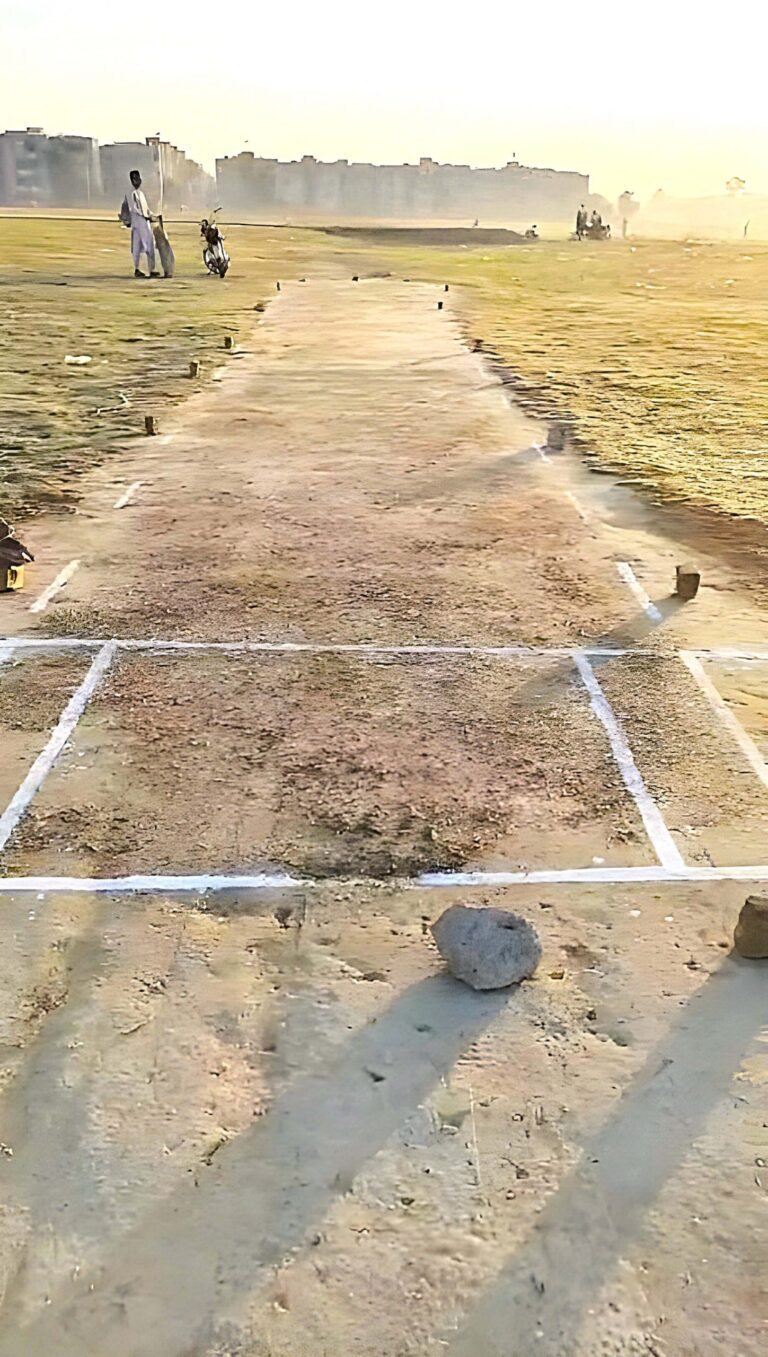
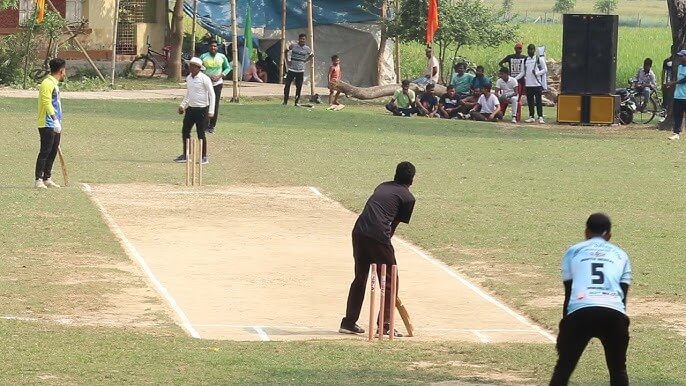
There is no single boundary measurement that every tape ball cricket ground in Pakistan follows. Unlike international cricket, tape ball matches are played in different settings, including streets, parks, school grounds, and dedicated tournament venues.
For a small local match, a shorter boundary may be the only practical option. A larger tournament ground, on the other hand, can have much longer boundaries.
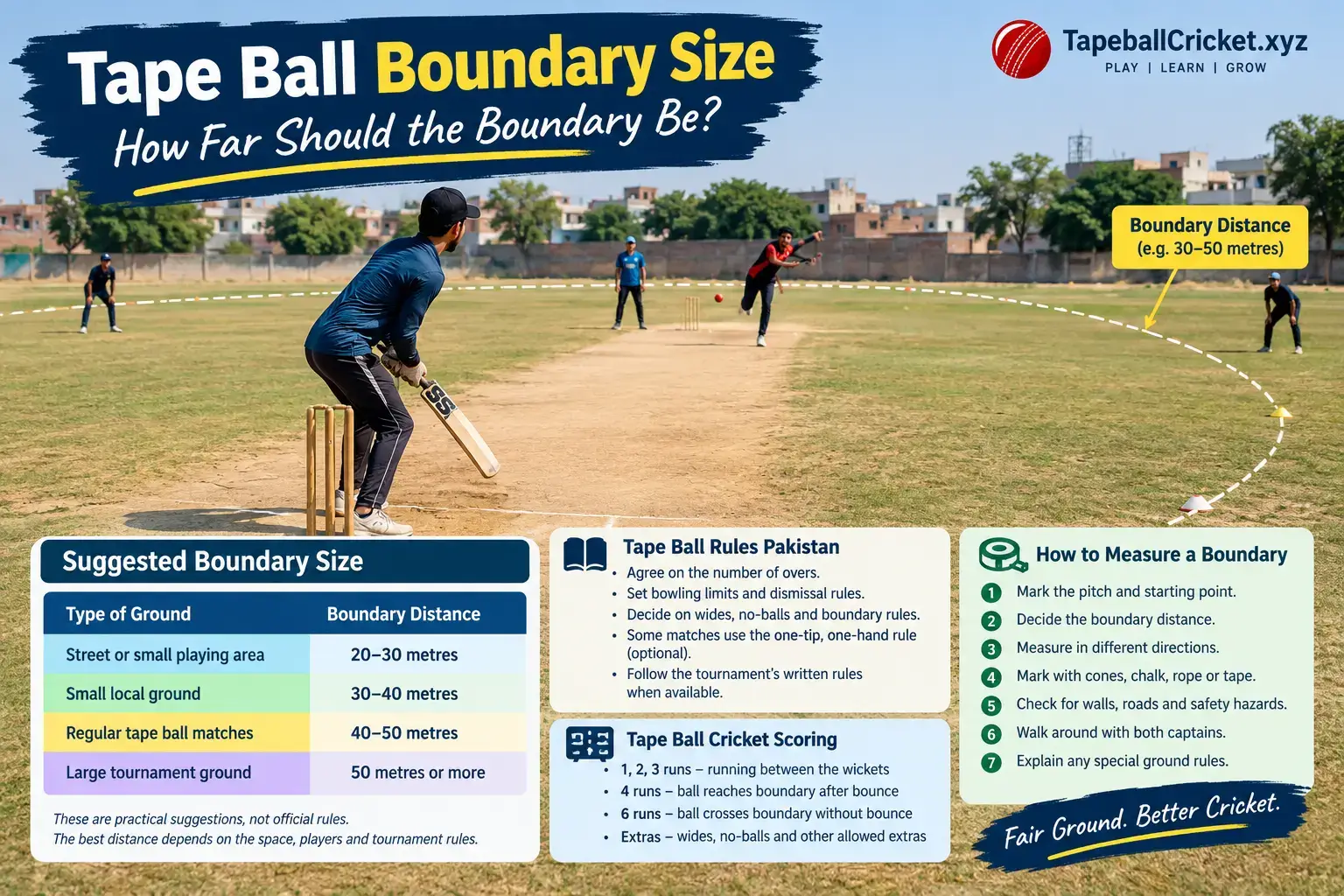
Here are some useful distances to consider when planning a ground:
| Type of ground | Suggested boundary distance |
|---|---|
| Street or small playing area | 20–30 metres |
| Small local ground | 30–40 metres |
| Regular tape ball matches | 40–50 metres |
| Large tournament ground | 50 metres or more |
These are practical suggestions, not official measurements for every competition. The best distance depends on the space available, the players, and the tournament rules.
How Far Should the Boundary Be From the Pitch?
Before marking a boundary, take a good look at the playing area. Is it a narrow ground between buildings, or is there enough open space for fielders to spread out? Are the players beginners, or are they experienced batters who regularly clear the boundary?
For a small ground, around 25 to 30 metres may be a workable starting point. If you have more space, a distance of 35 to 45 metres can make the game more challenging. Larger venues can accommodate distances of 45 to 55 metres or more.
These measurements should be treated as planning estimates rather than fixed rules. Also, make sure everyone understands how the distance is measured and where the boundary begins.
The shape of the ground matters too. Some local grounds have a wall on one side and open space on the other. In that situation, equal distances may not be possible. Clearly mark the playing area and explain any special boundary rules before the toss.
Why Does Boundary Size Matter in Tape Ball Cricket?
A boundary is not just a line around the ground. It can change how both teams approach a match.
Think about a batter who likes to hit the ball hard. On a short ground, that player might score plenty of sixes. Move the boundary farther away, and the batter may need better timing and shot placement to get the same result. Bowlers face a similar challenge. On a small ground, a slightly mistimed shot can still travel over the boundary. With more space available, accurate bowling and sensible field placements can become more valuable. Fielders also need to adjust. A larger playing area requires them to cover more ground, while a smaller one may leave less room for error.
The aim is to find a balance. You do not want every delivery to disappear for six, but you also do not want the boundary so far away that ordinary shots become pointless.
Tape Ball Rules Pakistan: What Should Players Agree On?
Anyone searching for tape ball rules Pakistan should understand one important thing: local rules are not always the same.
In street cricket, players often agree on the rules themselves. In a tournament, the organizers may provide a written set of playing conditions. Problems usually start when one team expects a particular rule and the other team has never played that way.
Before the match begins, both captains should confirm the number of overs, bowling limits, dismissal rules, wides, no-balls, and boundary decisions. For example, some local matches use the one-tip, one-hand rule, under which a fielder can catch the ball with one hand after its first bounce. Other matches do not use this rule at all. The boundary also needs attention. Decide whether a ball that crosses the line after bouncing counts as four and whether a ball that clears the line without bouncing counts as six.These are common conventions, but tournament-specific rules can differ.
It is much easier to settle these questions before the first delivery than to argue about them after a close finish.
Tape Ball Cricket Scoring: How Are Runs Counted?
Understanding tape ball cricket scoring is just as important as knowing the boundary size. A clear scoring system helps players follow the match and prevents confusion when the result is close.
In many local matches, runs are counted in familiar ways:
- Running between the wickets: Batters earn singles, twos, and threes by completing runs.
- Four runs: Usually awarded when a hit reaches the boundary after touching the ground, subject to the match rules.
- Six runs: Usually awarded when a batter hits the ball over the boundary without it bouncing first.
- Extras: Wides, no-balls, and other applicable extras are added according to the competition’s rules.
Imagine a batter hits the ball along the ground and it reaches the marked boundary. Under the usual convention, the batting team receives four runs. If the batter sends the ball over the boundary without a bounce, the team generally receives six. However, local tournaments sometimes introduce special rules for wides, no-balls, or other scoring situations. Never assume that every competition follows the same system.A scorekeeper should record the total runs, wickets, overs, individual batter scores, bowler figures, and extras.
For tournament matches, keeping a clear score sheet can save time and prevent disputes.
How to Measure a Tape Ball Cricket Boundary
You do not need expensive equipment to mark a local ground. A measuring tape or measuring wheel is usually enough for a straightforward setup.
Here is a simple way to do it:
- Mark the pitch and identify the agreed reference point for measuring the ground.
- Decide how far the boundary should extend based on the available space.
- Measure the distance in several directions rather than checking only one side.
- Mark the boundary with cones, chalk, rope, or another visible marker.
- Check for roads, walls, parked vehicles, and other hazards around the playing area.
- Walk around the ground with both captains to confirm the boundary.
- Explain any unusual ground rules before the match begins.
For a tournament, record the measurements before the first game and try to keep them consistent throughout the competition.
What Is the Best Boundary Size for a Tape Ball Tournament?
For many local grounds, a boundary of around 35 to 45 metres can be a reasonable starting point if sufficient space is available. However, there is no reason to force that measurement onto every ground.If the venue is small, safety and available space should come first. If the tournament features experienced power hitters and a large playing area, longer boundaries may create a more balanced contest.Also consider the type of tape ball being used. Different balls and different amounts of tape can affect how the ball travels, so the same boundary distance may produce different results from one match to another.
The most important thing is to make the decision before the game and apply the same rules fairly to both teams.
Frequently Asked Questions
- 1. What is the standard tape ball boundary size in Pakistan?
- There is no universally fixed standard for every tape ball match in Pakistan. Boundary distances depend on the ground, available space, and tournament rules.
- 2. How many metres should a tape ball boundary be?
- A local ground might use a distance of around 30 to 45 metres, while a larger venue can have longer boundaries. These are planning suggestions, not official requirements.
- 3. What is the best boundary size for a tape ball tournament?
- Around 35 to 45 metres can be a useful starting point when space allows. Organizers should consider player ability, ground conditions, and competition rules.
- 4. Should all sides of a tape ball ground have equal boundaries?
- Equal distances can make the ground easier to manage, but they are not always possible. If one side is shorter, clearly communicate the measurements and rules to both teams.
- 5. Does boundary size affect tape ball cricket scoring?
- Yes. Shorter boundaries generally make sixes easier to hit, while longer boundaries can reward better timing, placement, and running between the wickets.
- 6. How can I measure a tape ball cricket boundary at home or locally?
- Use a measuring tape or wheel, measure the playing area in different directions, and mark the limits clearly. Always check for nearby roads, walls, and other safety hazards.
Conclusion
Choosing the right tape ball boundary size is about more than deciding how far a batter needs to hit the ball for a six. It affects the balance between batting and bowling, the work required from fielders, and the overall enjoyment of a match. Whether you play in a small local ground or organize a tournament in Pakistan, start with the space you have and choose a distance that suits the players. Agree on the boundary and scoring rules before the match begins, and make sure both teams understand them.
A properly marked ground will not solve every argument in cricket, but it can prevent many unnecessary ones and help everyone focus on what they came to play: a good, competitive game of tape ball cricket.